Ask the public ECoC Library — answers drawn only from public documents.
The ECoC evidence base
Forty years of European Capitals of Culture in their own words: what cities promised, what they did, and what the evaluations found.
documents
cities
evaluations
bid books
title years covered
41 documents for “Capacity building of cultural sector”
Clear
Capacity Building Programme Another of our key priorities is capacity building across the cultural sector, both in the city of Bodø and across the county of Nordland.
…Y B U ACCESSIBLE HERITAGE ILDING YEAR OF GROWING 2025 Budweis 2028 is growing robustly, with projects blossoming to ensure we harvest as many cultural fruits as possible by 2028.
ECoC objective: Develop the skills, capacity and governance of the cultural sector ECoC objective: Stimulate partnership and co-operation with other sectors ECoC objective: Improve cultural infrastructure Galway 2020 aimed to build the…
Democratic culture – ensuring a wide range of access and availability in the field of cultural goods and services • Decentralised culture – providing equal opportunity for access to culture everywhere in the city Building the image of the…
…as a catalyst for change, in the Azores, means we are serious about going from monoculture to diversity, even if there is much to do with the cultural and creative sector’s relationships with business, cultural tourism and the blue…
In the context of this chapter, capacity building is also characterized by its punctual nature and strong focus on strategic skills for institutional development, and policy design and implementation.
SKILLS AND EXPERIENCE The ECoC process is a major capacity-building accelerator for the cultural and creative sector in our city. In BB there are seven cultural institutions managed by the city, two by the region, and one by the state…
METROPOLIS OF CULTURE Who can play along: employees of the cultural sector Why do we play: capacity building, networking With whom do we play: culture institutions from Metropolis GZM and Poland, partner institutions from other ECoC cities…
Residencies for artists with disabilities boost inclusion on an European scale. 42 Cultural and artistic content CAPACITY BUILDING: Kultuurikompass The goal of the capacity building programme Kultuurikompass (Culture Compass) is to…
…André Svendsen / Bodø2024 45 This all shows that program events offered possibilities for children and young people to not only participate in cultural life but also implement their own ideas.
The same applies to capacity building which also needs a steady and consistent timetable over a number of years. Selection of the European Capital of Culture Final report 15 Capacity The city council approved the bid, and the financing, in…
For the implementation of the Rijeka 2020 - European Capital of Culture project, it was crucially important to develop capacities within the cultural sector in order to enable the implementation of a rather comprehensive project, but also…
The Board would act as an incentive to encourage the private sector and public institutions to participate in the CCS Virtual Platform, as it would give alternative data sources a say on the ways in which statistics relevant to their…
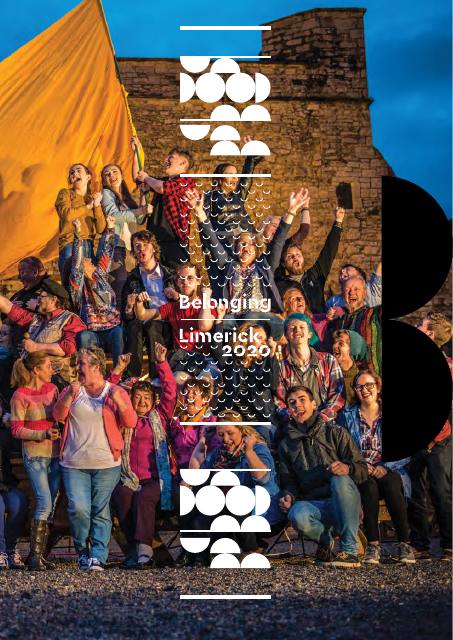
Those programme strands are Home, Quest and Interface 3) Inviting citizens of Europe to participate and belong Building Capacity Capacity-Building is a key objective for us and our Cultural Strategy.
…by proposing related programmes for several or all Capitals of Culture cities and their stakeholders with two-fold effects: Helping the cultural sectors in their lifelong learning efforts with skills for international cooperation and…
We have a dynamic cultural life, with a large number of events, yet very few producers have strategies for audience development; the interested people come mainly from the same social segment, and opportunities for cultural education are…
These two forces translate into a need – of capacity building for the cultural sector; and a potential – to grow and empower the work of institutions, organisations and individuals that capitalize the soft powers that can shine the light…
233), “boost to the cre- ation of cultural infrastructure” (Luxembourg, 1995,capacity building, community empowerment, im- age enhancement, confidence boosting, and rela- p.

Capacity building is a crucial element in implementing the Strategy, and has thus been listed as one of the strategic goals, and initiatives in this field will kick off immediately.
Increased skills and professionalism within the cultural sector. 2. Enhanced collaboration between amateurs and professionals. 3. Expanded international partnerships and cultural exchanges. 4.
…of the European Capital of Culture, and the 5-year process of preparing and delivering the proposed programme, will create the setting for the cultural integration of the four cities involved in this effort.
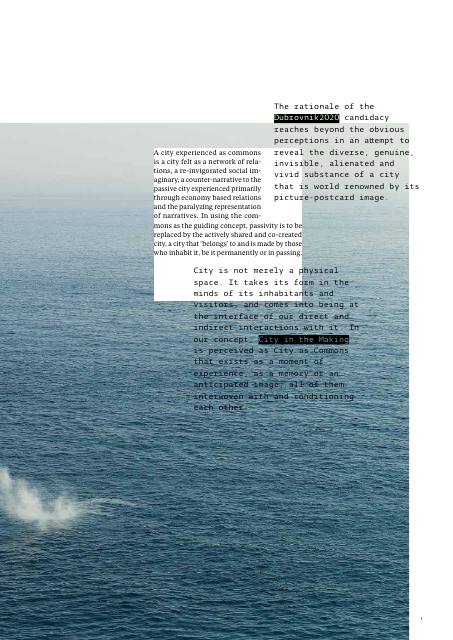
Aveiro 2027 — Candidate City, European Capital of Culture 2027 (pre-selection bid book)
Aveiro
2027 · Intent
This will drive the way we connect with people through our Outreach programme, it will influence the way we shape and deliver the 2027 Cultural and Artistic programme and promote positive change in creative ways.
“Bodø2024 was for tourists and the cultural elite, not for us.” Sami Culture Week 2023 | Photo: Fredrik Stenbro | | 7 3 Sami National Day 2023 | Photo: Fredrik Stenbro 74 | | 4.3.
Mille Formes 3.3.2 Ensure professionalisation and capacity building of actors Capacity building programme BID BOOK BUDWEIS CULTURE STRATEGY THE FOLLOWING TABLE SHOWS THE SPECIFIC BUDWEIS 2028 PROJECTS THAT ARE ALREADY ROOTED IN THE…
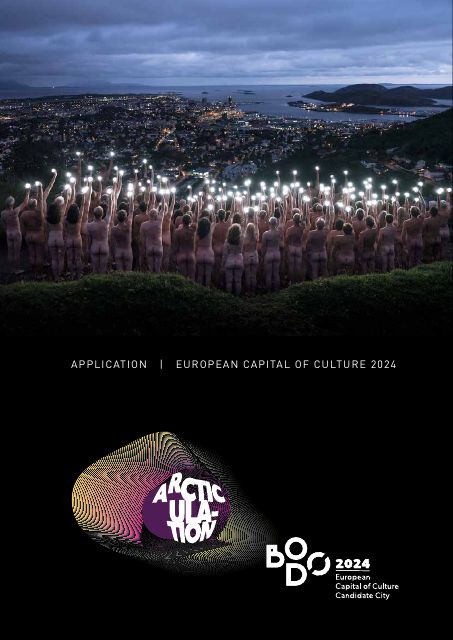
But the kind of society we want cannot succeed on gleaming new buildings alone. STRATEGIC OBJECTIVES To reverse the image of Nordland – internally and externally To widen the production base for culture To connect with groups still not…
Human sustainability will be achieved through massive efforts for capacity building and professionalization of the local cultural sector. Our recently initi- ated Regional Academy for Cultural Managers, the professional forums and…
Overall, ECoC is aligned with and supports the overarching objective of improving the competitiveness of the EU’s cultural and creative sectors set out in the Creative Europe 62 The Board of Aarhus 2017 | Aarhus 2017 63 "Among the…
There is considerable literature and research available for cities to see the range of cultural, urban development and social benefits of an ECoC.
These include contributing to Europe's cultural diversity and fostering international collaborations, and are fully supported by the public, private, and third sector organisations across the city and region.

Part of enhancing the cultural experience of the city, is the development of cultural infrastructure. This includes projects that range from the construc- tion of new cycle paths to the restoration of a com- munist building, or the reuse…
…big events like ECoC create disruptions and it is important to manage them wisely in order to achieve a long-lasting positive impact on the cultural scene that would extend beyond the event as such.
…key projects from the Kultura.PIKA Strategy initiate or participate in EU-projects · work on the climate policy for the cultural sector · develop a cultural network/platform of wider cross- border Istria build on sinergies · take over…

…specific training and support actions for the cultural sector in order to facilitate access to SFs. Capacity building actions should also be organised for cultural policy’s officials and managing authorities in each region.
LONG-TERM IMPACT: CULTURAL PARTICIPATION AND SOCIAL COHESION 002.1 SOCIOLOGICAL FACTORS : TENSIONS/ATTENTIONS Ensure that at least 70% of the city’s population has the opportunity to attend cultural events.002.2 Number and quality of…
All of these public discussions made us realise, however, that it was crucial to start working on what we identified as problems in Plovdiv’s cultural sector right away, not through discussions, but by offering opportunities to the…
sector (foundations, urban investors etc.) and local Eleusis key actors. In terms of geographical scope, the focus would be mostly on European countries with special emphasis on the Balkan region.
Nonetheless, there were instances of very high quality and overall the cultural programme offered a diversity of activities of many different artistic disciplines.
Structural consultation between the GKO and the social, care and welfare sectors, to increase dialogue between social needs and artistic planning and programming. 6.
To establish long-term exchanges with other cities holding the ECoC title, we not only developed links in the cultural program for the title year 2024, but also long-term and capacity building projects.